

Start in Windhoek and you're roughly equidistant from the dunes of Sossusvlei and the game-rich plains of Etosha National Park. It's also your last chance to stock up on expedition gear, satellite kit and bulk supplies before heading into remote, sparsely populated country. See our Namibia campervan guide for the whole country.
Where to pick up
- A full handover for a 4x4 camper takes 60 to 90 minutes. Staff cover dual-battery systems, rooftop tent setup and recovery kit use.
- Check all recovery gear before you leave: high-lift jack, tow ropes, tyre-pressure gauge and air compressor should all work.
- Make sure you've got two full-size spare tyres with legal tread. Tyre repairs are common out here, and tyre shops can be hundreds of kilometres apart.
- Check your documents for cross-border permits if you're heading into Botswana, Zimbabwe or South Africa.
Top tip
Don't rush off. Spend your first afternoon in Windhoek stocking up on dry food, water and firewood, and test-run your rooftop tent before heading into remote areas.
Getting from the airport to the depot
- Hosea Kutako International Airport (WDH) is 45 km east of Windhoek, with no rail or bus services.
- Most operators, including Avis Safari Rental, run scheduled airport-to-depot shuttles, included in your booking or bookable for a fee.
- Licensed shuttles and taxis wait outside arrivals. The trip to central Windhoek takes 40 to 45 minutes and costs roughly 350 to 500 NAD per passenger.
Confirm the meeting point and shuttle times with your rental company before you fly.
Drive times from Windhoek
Tap a destination to see the road, distance and driving time.
Okahandja
B1 · ~72 km · 50 mins from Windhoek
Tarred road to the historic Herero centre and its open-air woodcarvers' markets.
Rental depots (navy square pins)
- Windhoek International Airport Base – Hosea Kutako International Airport area (check your confirmation)
- Southern Industrial Area Depot – Southern Industrial / Prosperita (check your confirmation)
Addresses as listed by each company on our booking site; some companies share the same depot. Others confirm their depot address when you book.
Drive times are typical summer estimates in a motorhome. Open the full Canada RV map →
Campervan companies in Windhoek
Expedition rentals in Namibia are usually purpose-built 4x4 utes with heavy-duty all-terrain tyres, dual fuel tanks, auxiliary batteries and canvas rooftop tents, rather than European-style coachbuilt motorhomes.

Real vehicles you can book in Namibia
Tap a vehicle to see its photos, floorplan and live prices for your dates.
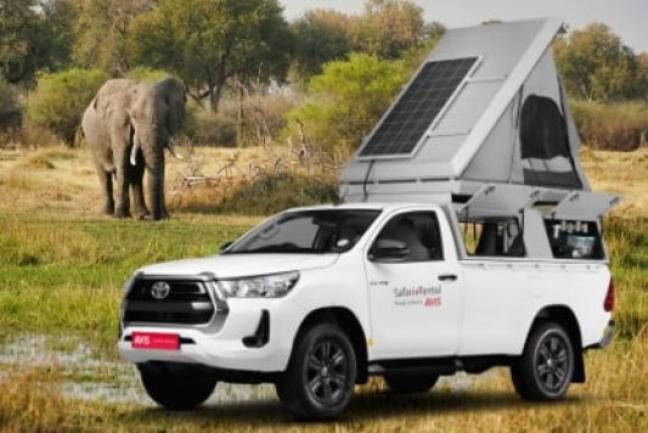
Avis Safari Rental · 4x4 rooftop-tent camper
Group A Hilux / Ranger Single Cab 4x4
Best for: Couples on a budget
Check dates & prices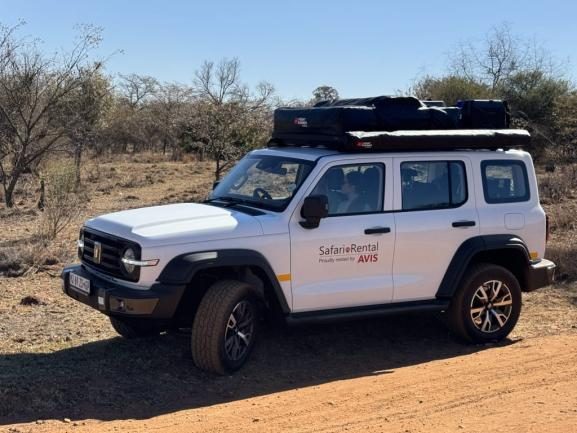
Avis Safari Rental · 4x4 safari camper
Group B Safari Camper
Best for: Couples
Check dates & prices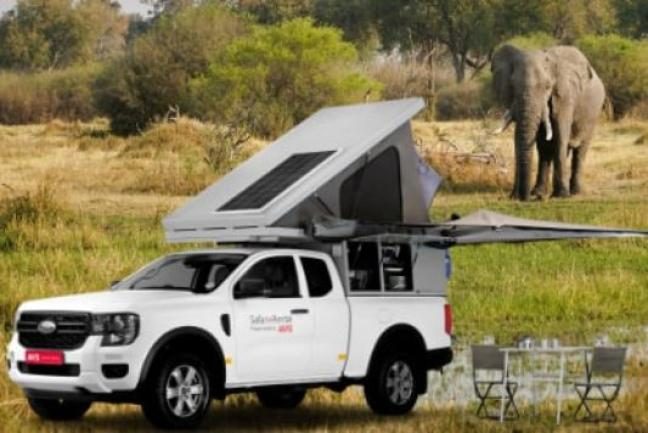
Avis Safari Rental · 4x4 safari camper
Group L Ford Ranger Safari Camper
Best for: Couples wanting comfort
Check dates & prices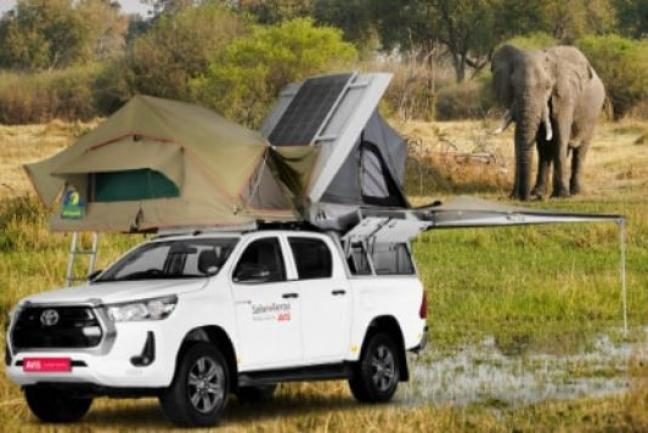
Avis Safari Rental · 4x4 double-cab camper
Group O Hilux Double Cab 4x4
Best for: Families of 4
Check dates & prices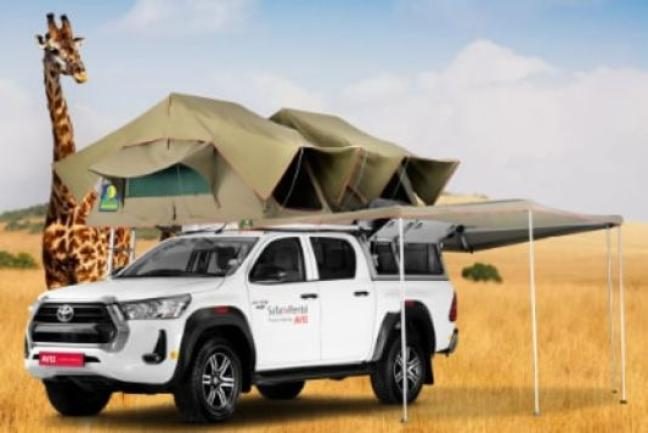
Avis Safari Rental · 4x4 luxury camper
Group N Hilux Luxury Camper
Best for: Families of 4
Check dates & prices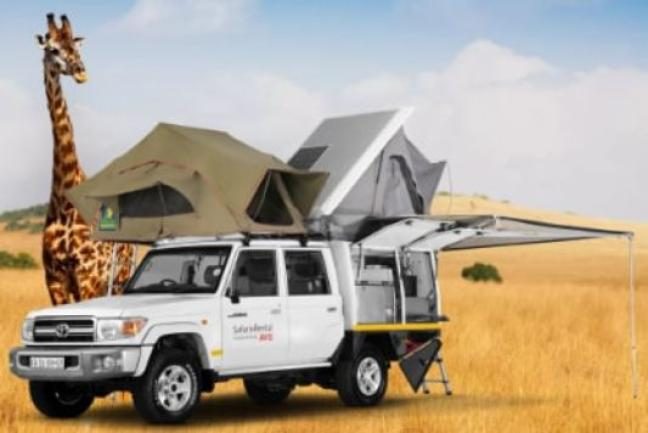
Avis Safari Rental · Land Cruiser 4x4
Group C Toyota Land Cruiser
Best for: Remote routes, groups of 4
Check dates & pricesDay 1 survival kit
- Collect your vehicle and check the full inventory: cooking gear, bedding, fridge settings and water containers.
- Stock up at Grove Mall of Namibia or Maerua Mall, both with large SuperSPAR and Checkers supermarkets for meat, water and shelf-stable food.
- Head to an outdoor shop like Cymot or Bushwhackers in the Southern Industrial Area for extra camping gear, fire lighters and satellite phone rental.
- Fill both fuel tanks. Filling stations across Namibia take cards, but carry enough cash (NAD or ZAR) too, as card terminals often lose signal in remote areas.
- Check your on-board water tank works, and buy at least 5 litres of bottled drinking water per person per day as a backup.
Where to spend the first night
- Urban Camp (Klein Windhoek): a shaded, secure city site with clean ablutions, Wi-Fi and an on-site bar, 5 minutes from the shops.
- Arebbusch Travel Lodge (Olympia): in southern Windhoek, with grassed camper pitches, private braai pits and power hook-ups.
- Daan Viljoen Game Reserve Campsite: 20 km west on the C28. Camp among free-roaming wildlife in the Khomas Hochland hills on night one.
- Elisenheim Guest Farm: 15 km north of Windhoek, with quiet rural camping and full facilities, handy if you're starting out on the northern B1.
Returning your campervan
- Return the camper with full fuel tanks. There are service stations on the B6 near the airport and on Sam Nujoma Drive.
- Clean off excess mud and sand. Depots may charge for valeting heavily soiled upholstery or air filters.
- Allow at least 45 minutes for check-in, when staff check tyres, camping kit and the underside for gravel damage.
- Tell staff about any punctures, mechanical warnings or windscreen chips from gravel roads during your debrief.
Road trips from Windhoek

Etosha National Park Wildlife Circuit
7-9 days · ~1,100 km
Drive north on the B1 via Otjiwarongo to Etosha's southern Andersson Gate. Base yourself at Okaukuejo and Halali to watch game at lit waterholes at night, then exit via Namutoni.

Classic Sossusvlei & Desert Escarpment Loop
5-7 days · ~850 km
Drop down via Spreetshoogte or Remhoogte Pass to Sesriem. Explore the old dunes at Sossusvlei and Deadvlei, cross gravel plains to Solitaire, then return through the Khomas Hochland passes.

Atlantic Coast & Damaraland Traverse
8-10 days · ~1,250 km
Drive west to the cool coastal town of Swakopmund, then north past the Cape Cross seal colony into Damaraland. Camp near Twyfelfontein's rock engravings and look for desert-adapted elephants in the dry riverbeds.

Southern Odyssey: Kalahari & Fish River Canyon
9-12 days · ~1,600 km
Head south on the B1 through Mariental into the red dunes of the Kalahari, then on to Fish River Canyon. Camp on the rim at Hobas, and return via the Quiver Tree Forest near Keetmanshoop.
See day-by-day itineraries for Namibia →
Driving out of Windhoek
- Drive on the left. Seatbelts are compulsory for everyone, and headlights must stay on at all times on open highways.
- Speed limits are 120 km/h on paved B-roads and 60 km/h in towns. Rental insurance caps you at 80 km/h on gravel roads.
- Vehicles carry GPS tracking. Go over the gravel speed limit and you can void your collision damage insurance straight away.
- Drop tyre pressure by 10 to 15 percent when you move from tar to gravel (usually 1.8 to 2.0 bar). It softens the ride and cuts puncture risk.
- Don't drive after dark outside towns. Wildlife, livestock and unlit vehicles make rural roads risky at night.
- There are no toll roads in Namibia, but you'll pay conservation entry fees at Ministry of Environment gates.
Must-do & must-try
- Climb Dune 45 before dawn to watch the sun cut sharp shadows across the Sossusvlei dunes.
- Sit by the floodlit Okaukuejo waterhole in Etosha after dark and watch black rhino, elephant and lion drink together.
- Eat game steaks, oryx, kudu and springbok, at Joe's Beerhouse, Windhoek's famous tavern.
- Visit Christuskirche and the Independence Memorial Museum in central Windhoek for the country's colonial and liberation history.
- Try biltong and droëwors from a local butcher before you head out into the Kalahari.
Windhoek campervan hire FAQs
Do I need a 4x4 campervan to travel in Namibia?
Main roads between towns are paved, but reaching Sossusvlei, Damaraland and parts of Etosha means driving on graded gravel and sand. A high-clearance 4x4 is essential.
Can I wild camp anywhere in Namibia?
Wild camping is banned on communal land, private farms and in national parks. Stick to established rest camps, private campsites or community conservancy sites.
What driving licence do you need to rent a camper in Windhoek?
A valid national licence printed in English is accepted. If yours is in another language, bring a certified translation or an International Driving Permit too.
Is tap water safe to drink in Namibia?
Tap water in Windhoek and major towns is treated and safe to drink and cook with. In remote desert areas, water comes from boreholes, usually safe but mineral-rich, so keep bottled water handy.
How does fuel availability work in remote areas?
Fuel stations can be more than 200 km apart, and remote pumps sometimes run dry. Top up your main and auxiliary tanks whenever you pass a town or major junction, whatever your gauge says.
Are South African Rands accepted in Namibia?
Yes. The Namibian Dollar (NAD) is pegged 1:1 to the South African Rand (ZAR). You can spend either currency in Namibia, but Namibian Dollars aren't accepted in South Africa.
How does the Price Beat Guarantee work?
Find a lower price and we'll beat it. The quote must be for the same vehicle from the same supplier, with identical depots, dates and times, matching inclusions, mileage and excess options, and be live and verifiable before you book. Conditions apply — see our terms.
Other Namibia pickup guides: Swakopmund · Walvis Bay