Discover Australasia by Campervan
Many of our customers try to combine campervan rental in both Australia and New Zealand. While this sounds like an excellent idea it is only a good one if you have a long, long holiday.
New Zealand looks like a small country but takes a minimum of 6 weeks to explore just the highlights.
Australia is vast and you would need a year to explore just the outside edge of the country and you would be missing such stand-out sites such as Uluru, Alice Springs and the Bungle Bungles.
Our advice is maximise exploring one area of each country. So, if you have two weeks, a Sydney to Cairns trip would be a great first visit. If you were to take the next two weeks in New Zealand then pick up and drop off your campervan in Christchurch and choose one area to really go to town on. Or spend time in the North Island for a couple of weeks and pick up and return to Auckland.
One-way rentals save on time as you won’t be back-tracking. Both countries offer one-way rentals.
Our very user-friendly trip planning pages help a lot:
Top Tip:
Many rental companies supply rental in both New Zealand and Australia and will often give a discount if you rent in both countries with them. Rent for over 21 days combined for a larger discount.
Rental Companies that have depots in both New Zealand and Australia
Apollo
Britz
Campervan Village
Cheapa Campers
Hippie Campers
Indie Campers
Jucy Campers
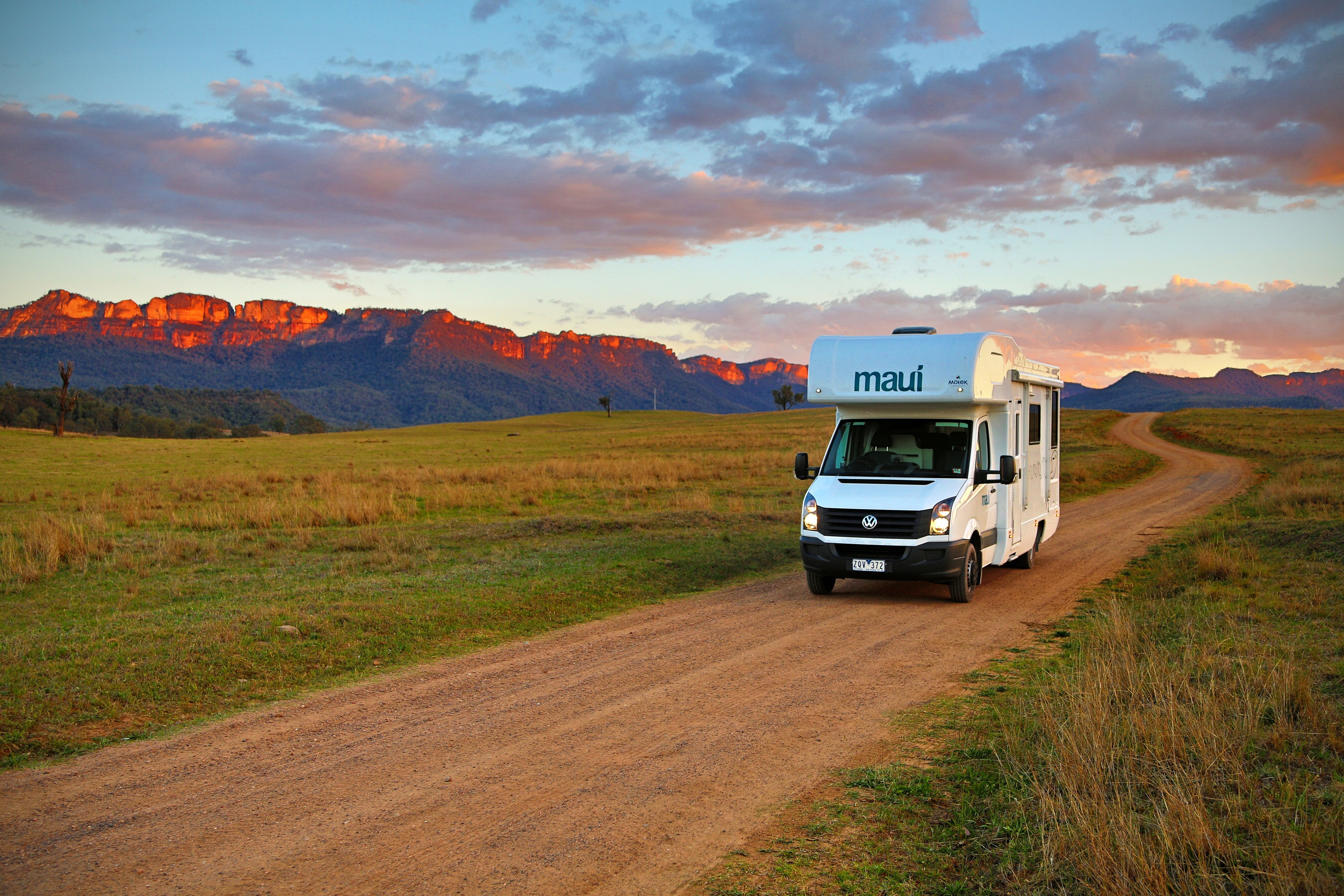
Maui
Mighty Campers
Spaceships
Star RV
Campervan Companies only in Australia
Autosleepers
Awesome Campers
Calypso Campers
Camperman
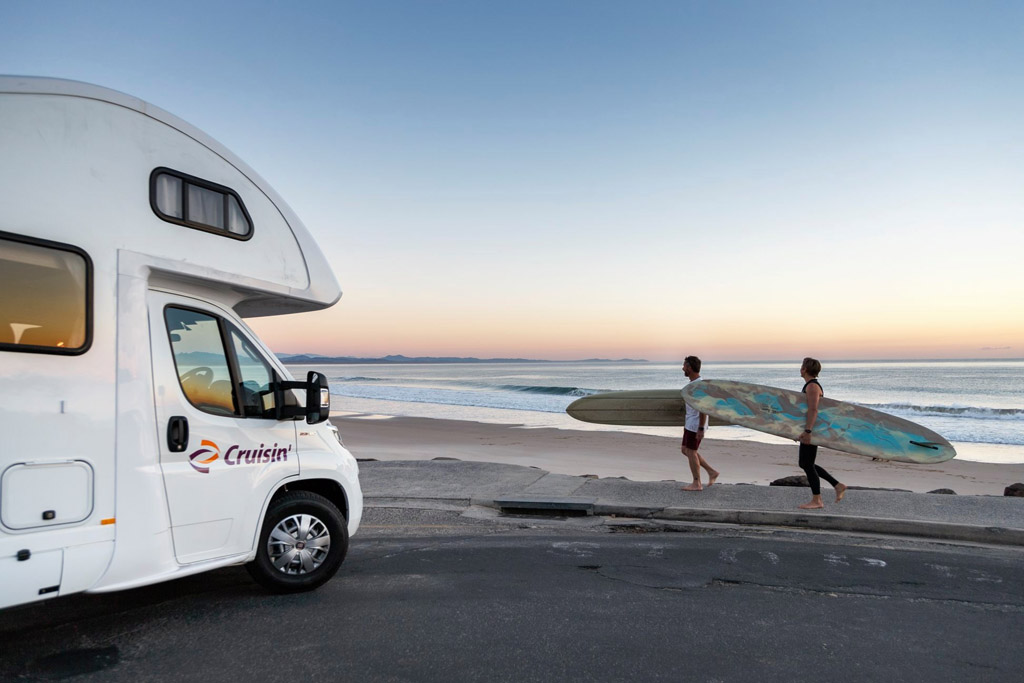
Cruisin Motorhomes
Go Cheap
Let’s Go Campers
Campervan Companies only in New Zealand
Adventure Campers
Discover New Zealand
Elements RV World
Escape Campers
Freedom Campers
Go Rentals
Happy Campers
Just Go
Kiwi Campers
Lucky
McRent
Nomad Motorhomes
Pacific Horizon
Road Runner
Sunta Campers
Tui Campers
When is the best time to travel to Australia?
The best time to travel to Australia varies by state due to its different climates, from tropical in the north to temperate in the south. Here’s a breakdown by state, considering weather, events, and tourist seasons:
New South Wales (NSW): Spring (September to November) and Autumn (March to May) are ideal for Sydney and surrounds. Temperatures are mild (15-25°C), perfect for beach visits or exploring the Blue Mountains. Summer (December to February) is warm but crowded, especially during school holidays. Winter (June to August) is cooler (10-15°C) but good for festivals like Vivid Sydney.
Blue Mountains:
Best Time: Autumn (March-May) for clear skies and vibrant autumn foliage, or Spring (September-November) for wildflowers.
Winter: Can be cold and misty, but also atmospheric.
Northern NSW (e.g., Byron Bay):
Best Time: Autumn (March-May) and Spring (September-November) for warm, sunny weather.
Summer: Hot and humid, with a higher chance of rain.
Victoria: Autumn (March to May) and Spring (September to November) offer comfortable weather (15-22°C) for Melbourne’s cultural scene, Great Ocean Road drives, or Yarra Valley wine tours. Summer (December to February) is warm but busy, with events like the Australian Open. Winter (June to August) is cold (8-14°C) but great for skiing in the High Country.
Victorian Alps (Skiing):
Queensland: Late Autumn to early Spring (May to September) is best for Brisbane, the Gold Coast, and Cairns. The dry season (20-30°C) is perfect for the Great Barrier Reef and rainforests, avoiding summer’s heat, humidity, and cyclone risks (December to March). Winter (June to August) is the peak season, so book early.
Wet Season (November-April): Hot, very humid, and prone to heavy rain, thunderstorms, and cyclones. Some tours may be limited, but waterfalls are spectacular.
Western Australia (WA): Spring (September to November) is prime for Perth and the south, with wildflowers blooming and temperatures ranging from 15 °C to 25 °C. For the north (e.g., Broome, Kimberley), the dry season (April to October, 25-35°C) is best, as it avoids the summer’s wet season and extreme heat. Margaret River’s wine region shines in spring and autumn.
Ningaloo Reef (Whale Sharks):
South Australia: Autumn (March to May) and spring (September to November) are ideal for Adelaide and the Barossa Valley, with mild weather (15-25°C). Summer (December to February) can hit 35°C, while winter (June to August) is cooler (10-15°C) but suitable for indoor activities like museums or wine tasting. Autumn coincides with wine harvest festivals.
Kangaroo Island:
Tasmania: Summer (December to February) is best, with longer days and warmer weather (15-22°C) for hiking in Cradle Mountain or exploring Hobart. Autumn (March to May) is vibrant with Autumn colours, while winter (June to August) is cold (5-12°C) but cozy for festivals like Dark Mofo.
Northern Territory (NT): The dry season (May to October, 20-32°C) is optimal for Darwin, Uluru, and Kakadu National Park, with clear skies and accessible roads. The wet season (November to April) brings heat, humidity, and flooding, making travel challenging, especially in remote areas.
Australian Capital Territory (ACT): Spring (September to November) and autumn (March to May) are best for Canberra, with mild temperatures (12-22°C) and events like Floriade. Summer can be hot (25-30°C), while winter (June to August) is crisp (0-12°C), good for cultural attractions like the National Gallery.
General Tips:
- Spring and Autumn are generally less crowded and offer pleasant weather across most states.
- Summer is the peak season with higher prices and crowds, especially in coastal areas.
- For specific events or activities (e.g., surfing, skiing, or festivals), check local calendars, as they can influence the best time to visit.
- If planning to visit multiple states, Spring (September to November) is the most versatile season for moderate weather and fewer crowds.
When is the best time to travel to New Zealand?
The best time to travel to New Zealand largely depends on what you want to experience, but in general:
Summer (December–March) is considered the ideal time for most travellers. During these months, you can expect long, sunny days with mild to warm temperatures (around 16–25°C or 61–77°F), perfect for outdoor adventures, beaches, hiking, and festivals. This is the busiest tourism season, so popular sites can be crowded and accommodation prices are higher. Book campsites early in popular places like Rotorua and Queenstown. Christmas and New Year’s holidays are when New Zealanders take their long holidays.
Late Summer to Early Autumn (February–March) is especially recommended—school holidays are over, crowds thin out, and the weather remains warm and pleasant. March is known for being settled and comfortable, making it excellent for hiking, water activities, and exploring scenic areas. Book your rental to start in the South Island and end in the North Island. Autumn foliage (especially in Central Otago), and fewer tourists. Ideal for wine tours in Marlborough or cycling the Otago Rail Trail.
Spring (September–November) is another excellent time. This season features blooming flowers, baby animals, and fewer tourists. The weather is warming up, and it’s a great time for both sightseeing and outdoor activities. Some areas may still be cool, especially in the South Island. Book your trip North Island to South Island one-way.
Perfect for hiking in places like Tongariro National Park or exploring gardens in Christchurch. September can be rainy, but October and November are more settled. Great for budget travellers as prices are lower before peak season.
Autumn (March–May) offers cooler temperatures, beautiful foliage, and less crowded attractions, but is still generally pleasant for travel and outdoor pursuits.
Winter (June–August) brings cold, wet weather to much of New Zealand, especially the South Island. This is the best time for skiing and snowboarding in areas like Queenstown, Otago, and Canterbury. Many hiking trails—especially in alpine areas—can be inaccessible due to snow and ice. Check that mountain passes are open before you set off. Non-ski areas like Auckland or Wellington are quieter and cheaper, but rain is common in the North. Winter festivals, like Queenstown’s Winter Festival,
Key Tips:
For warm weather and festivals: December–March, with February and March being optimum for fewer crowds.
For hiking: October–April is best, avoiding the icy winter months.
For skiing/snow sports: June–August in the South Island.
Overall, New Zealand is a year-round destination, but most visitors prefer late spring to early autumn for the best blend of weather and activities. School holidays (mid-December to late January, and Easter) see the highest domestic travel, so plan accordingly for availability and pricing.
North Island: Summer and autumn are great for Auckland’s beaches or Rotorua’s geothermal sites. Winter can be wet but is suitable for cultural attractions.
South Island: Spring and autumn suit hiking and sightseeing in Fiordland or the West Coast. Summer is busy but vibrant, while winter is prime for snow sports.
Events: Summer hosts festivals like Auckland’s Laneway, while spring’s Diwali Festival adds cultural flair. Check local event calendars for specific dates.
Crowds and Costs: Summer is peak season, so book early. Spring and autumn offer better deals and fewer crowds. Winter is cheapest outside ski resorts.
Weather Variability: New Zealand’s weather is unpredictable. Pack layers, especially for the South Island’s changeable conditions.
Recommendation: For a balance of good weather, fewer crowds, and affordability, late spring (October to November) or early autumn (March to April) are the best times to visit. These periods suit most outdoor activities and offer pleasant conditions across both islands.
Weather: The best time to visit New Zealand is from September to May as New Zealand is in the southern hemisphere with seasons opposite to the northern hemisphere.
Crowds vs Weather Trade-off: Summer is perfect for sunseekers and beach goers, winter for snow-sports and hot chocolate enthusiasts, and autumn and spring for those looking to explore without the crowds.
Climate Variability: You are very likely to experience 4 seasons in one day, which is very normal! Also, New Zealand is lush and green for a reason! The average rainfall is high and spread evenly throughout the year.
The sweet spot appears to be late January through March, offering warm weather with diminishing crowds, followed by the shoulder seasons of autumn and spring for fewer tourists and lower prices.
Top 10 Must-See Attractions in Australia & New Zealand
Australia
Great Ocean Road (VIC) – A spectacular coastal drive with incredible rock formations like the Twelve Apostles. Numerous caravan parks and free camps along the route.
Uluru & Kata Tjuta (NT) – The spiritual heart of Australia. Witnessing Uluru at sunrise and sunset is an unforgettable experience. There are dedicated campervan parks nearby.
Great Barrier Reef (from Cairns or Port Douglas), QLD: Access this natural wonder from coastal towns that offer plenty of caravan parks. Day trips take you out to the reef for snorkelling or diving.
Daintree Rainforest & Cape Tribulation (QLD) – World's oldest rainforest meets the Great Barrier Reef.
Kakadu National Park, NT: A UNESCO World Heritage site known for its Aboriginal rock art, wetlands, and diverse wildlife. Well-equipped campgrounds are available within the park.
Sydney & Bondi to Coogee Coastal Walk (NSW) – While the city itself can be tricky for campervans, you can park in nearby caravan parks (e.g., Lane Cove) and use public transport to see the Opera House, Harbour Bridge, and Bondi Beach.
Byron Bay, NSW: A laid-back coastal town with beautiful beaches, great surfing, and a vibrant atmosphere. Plenty of caravan parks and a good base for exploring the Northern Rivers region.
Margaret River (WA) – A wine region with surf, caves, and forested drives.
Blue Mountains (NSW) – Dramatic cliffs, bushwalks, and towns, just west of Sydney.
Tasmania's National Parks (e.g., Cradle Mountain-Lake St Clair), TAS: Experience pristine wilderness, stunning hiking trails, and unique wildlife. Numerous well-maintained caravan parks and DOC (Department of Conservation) campsites.
Kangaroo Island (SA) – Wildlife, rugged coastlines, and remote beaches (van ferry from mainland).
The Kimberley & Gibb River Road (WA) – A legendary 4WD adventure for outback lovers (for rugged campervans).
Fraser Island / K’gari (QLD) – World’s largest sand island with freshwater lakes and 4WD beach driving. The world's largest sand island offers unique 4x4 campervan adventures (ensure your vehicle is suitable or join a tour). Book permits and camping in advance.
Adelaide and the Barossa Valley, SA: Explore charming Adelaide city before heading to the world-renowned Barossa Valley for wine tasting. Many caravan parks are available in both areas.
New Zealand
Milford Sound (Fiordland) – Fjord cruises surrounded by mountains and waterfalls.
Queenstown & Glenorchy (South Island) – Adventure central with lakeside camping and alpine drives.
Aoraki/Mount Cook National Park (South Island) – Glacier views, hikes, and night skies.
Rotorua (North Island) – Geothermal wonders, Maori culture, and accessible campsites.
Tongariro Alpine Crossing (North Island) – NZ’s most famous day hike with epic volcanic scenery.
Abel Tasman National Park (South Island) – Coastal walking/kayaking paradise with campsites along the trail.
Lake Tekapo (South Island) – Stargazing hotspot with nearby thermal pools and freedom camping.
Coromandel Peninsula (North Island) – Hot Water Beach, Cathedral Cove, and forests.
Waitomo Caves (North Island) – Glowworm caves and underground adventures.
West Coast Glaciers (South Island) – Drive up to Franz Josef and Fox Glacier; walk to viewpoints or heli-hike.
Top 10 Hidden Gems in Australia & New Zealand
Off-the-beaten-path destinations for adventurous campervan explorers.
Australia
Coorong National Park (SA) – Remote, saltwater lagoons teeming with birdlife; camp beside the dunes.
Boodjamulla (Lawn Hill) National Park (QLD) – Vibrant outback gorge with canoeing and waterfalls.
Snowy Mountains & Alpine Way (NSW) – High-country road trips, wildflowers, and lakeside camps.
Cape Le Grand National Park (WA) – Turquoise bays and kangaroos on the beach (Esperance area).
Yorke Peninsula (SA) – Quiet surf beaches, fishing villages, and low-cost coastal campsites.
Gariwerd / Grampians National Park (VIC) – Sandstone ridges, Aboriginal rock art, and scenic hikes.
Carnarvon Gorge (QLD) – Lush gorge in central QLD with walking trails and Indigenous sites.
Arkaroola Wilderness Sanctuary (SA) – Remote Flinders Ranges 4WD paradise for astronomy and geology buffs.
Mount Field National Park (TAS) – Close to Hobart with waterfalls, alpine lakes, and glowworm walks.
Ningaloo Reef (WA) – Swim with whale sharks or snorkel straight from the beach—more relaxed than the Great Barrier Reef.
New Zealand
The Catlins (South Island) – Waterfalls, sea lions, petrified forest, and empty beaches.
Molesworth Station (South Island) – High-country gravel roads open in summer for true remote driving.
Waipoua Forest (North Island) – Home of the giant Kauri tree, Tane Mahuta; sacred and serene.
Whanganui River Road (North Island) – Historic river drive with Maori culture and wild camping.
Golden Bay (South Island) – Laid-back vibe beyond Abel Tasman, with caves, springs, and quiet beaches.
East Cape (North Island) – Remote Maori communities, coastal drives, and sunrise at the easternmost point of NZ.
Lake Ohau (South Island) – Quiet lake near Mount Cook, perfect for peaceful overnight camping.
Cape Palliser (North Island) – Rugged coast, fur seals, and a red-striped lighthouse with a wild view.
Oparara Basin (South Island) – Limestone arches and rainforest near Karamea at the top of the West Coast.
Denniston Plateau (South Island) – Historic coal mining site with eerie remains and sweeping mountain views.
Bonus Tip for Campervan Users
Wikicamps (Australia & NZ): Use it to find free or low-cost campgrounds, dump stations, and local tips.
DOC Campsites (NZ): Many hidden gems have basic but beautiful Department of Conservation sites.
4WD or regular campervan? Some hidden gems (like Gibb River Road or Fraser Island) require 4WD.