
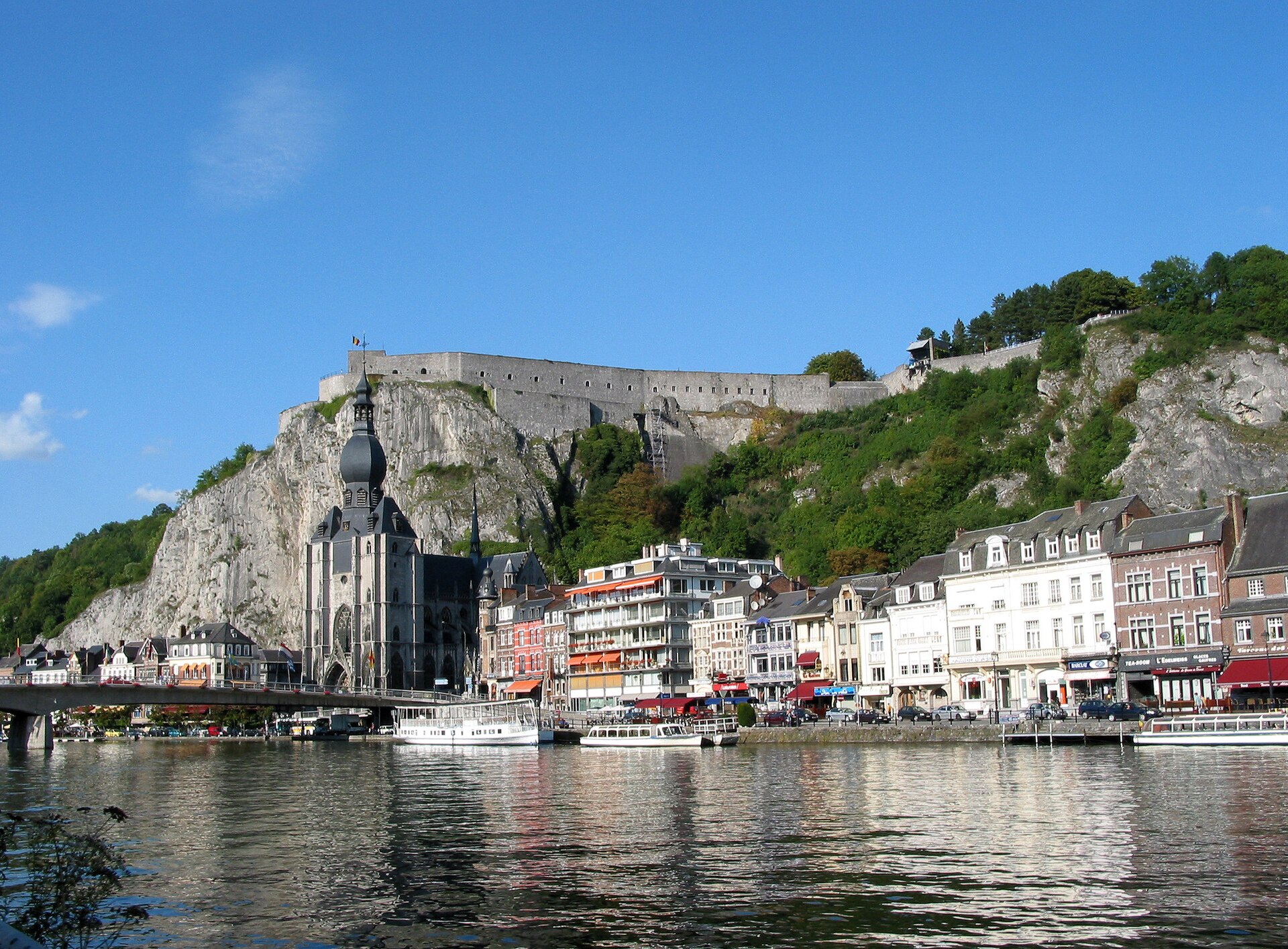
Real vehicles you can book
Tap a vehicle to see its photos, floorplan and live prices for your dates.
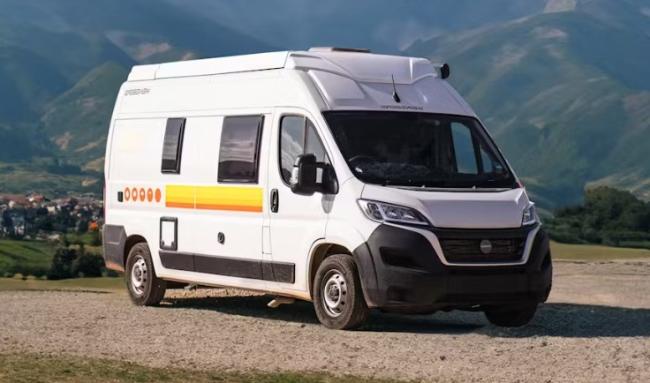
Indie Campers · Campervan · sleeps 2
Active Bunk
Best for: Couples
Check dates & prices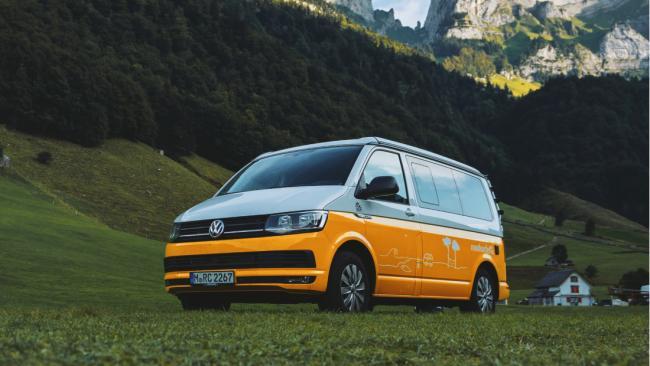
roadsurfer · Campervan · sleeps 2
Beach Hostel
Best for: Couples
Check dates & prices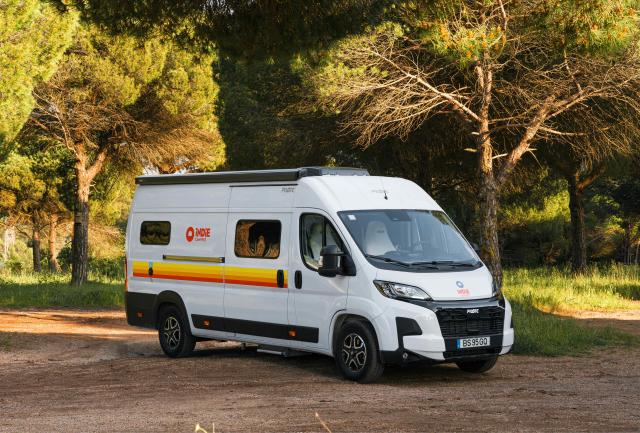
Indie Campers · Campervan · sleeps 2
Active Long Select
Best for: Couples
Check dates & prices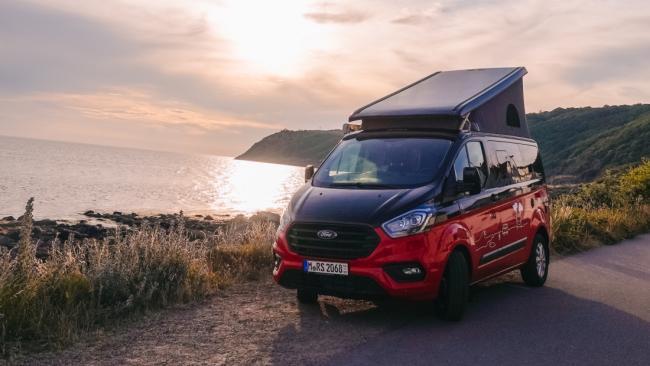
roadsurfer · Campervan · sleeps 2
Camper Cabin
Best for: Couples
Check dates & prices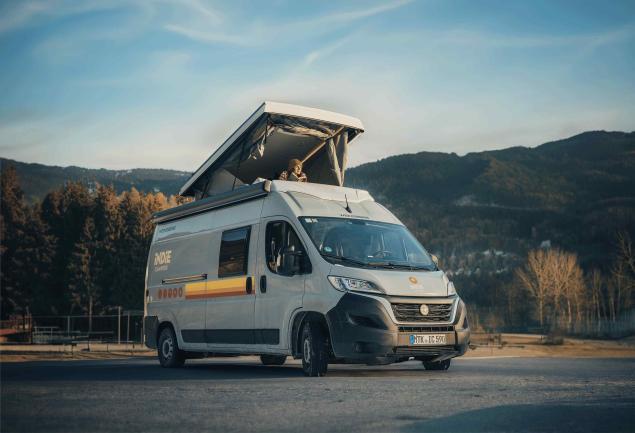
Indie Campers · Campervan · sleeps 2
Active Pop Top Auto Select
Best for: Couples
Check dates & prices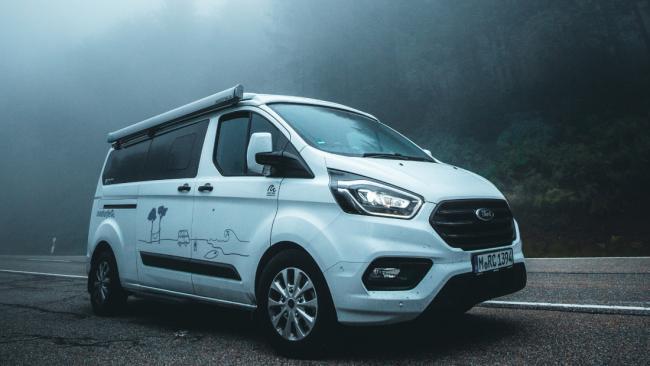
roadsurfer · Campervan · sleeps 2
Camper Cabin Deluxe
Best for: Couples
Check dates & pricesRental companies in Belgium
We only list established fleets with their own vehicles. No peer-to-peer rentals and no paid rankings.

Indie Campers
A major European operator with modern compact campervans and family motorhomes, online check-in and flexible extras.
View fleet & profile →

roadsurfer
Colourful, well-equipped compact campervans and van conversions, mostly on Volkswagen and Mercedes-Benz chassis, with unlimited mileage.
View fleet & profile →
Where to pick up your campervan
Brussels & Central Brabant
Belgium's capital, home to EU institutions, grand royal parks and a lively old centre.
- Brussels →
- Brussels Airport →
- Brussels South Railway Station
Flanders & The North Sea Coast
Medieval towns, great cycling routes, North Sea resorts and First World War battlefields.
Wallonia & The Ardennes
Southern Belgium's forests, limestone river cliffs, medieval citadels and old industrial towns.
Belgium campervan map: pickups and highlights
Dark blue dots are pickup locations. Tap any other dot to see the nearest pickup and a rough drive time.
Belgium pickup city guides
More European guides: Albania · Austria · Bosnia · Bulgaria · Croatia · Czech Republic · Denmark · Estonia · Finland · France · Germany · Greece · Hungary · Iceland · Ireland · Italy · Latvia · Liechtenstein · Lithuania · Luxembourg · Macedonia · Monaco · Montenegro · Netherlands · Norway · Poland · Portugal · Romania · Serbia · Slovakia · Slovenia · Spain · Sweden · Switzerland
Top tip
Most depots near Brussels and Antwerp sit on the edge of town or near transit hubs, not in the old centres. If your route goes through Brussels, Antwerp or Ghent, check Low Emission Zone (LEZ) registration with your supplier. Collect and return mid-morning or early afternoon to dodge rush hour on the Brussels and Antwerp ring roads.
Trip cost calculator: fuel and campsites
Pick one of the road trips below or type your own distance to estimate fuel and overnight costs in EUR.
- Plan for (+20% detours)
- 336 km
- Fuel (44 litres)
- €76
- Campsites
- €260
- Fuel + campsites
- €336
Road fees: Belgian motorways are toll-free for campervans under 3.5 tonnes. No general vignette needed.
Belgium sets maximum fuel prices. Motorway service stations usually charge more than hypermarkets off the motorway. Estimates only; rental price, insurance and any mileage charges are shown in your quote.
Why choose Belgium for a campervan holiday?
Belgium is small, so you won't spend your trip driving. Within two hours you can go from the sandy dunes of West Flanders to the beech forests and limestone caves of the Ardennes. The food is a big draw too: Abbey ales, artisan chocolate and good markets in Ghent, Bruges and Dinant. A wide network of 'camperplaatsen' and 'aires de camping-car' gives you cheap overnight stops near town centres and national parks. Motorways are toll-free for vehicles under 3.5 tonnes, and borders into France, Germany, Luxembourg and the Netherlands are open with no checks. Belgium works well on its own or as a base for a wider European trip.
Which vehicle suits your group?
Compact Campervan (e.g. VW California) — Solo travellers and couples who want easy parking in town.
- Pop-top roof gives you a double bed, keeping the van under two metres tall.
- Compact kitchenette with two gas burners, a cool box and a fresh water canister.
- Fits standard car parking bays and handles narrow medieval streets easily.
- Good fuel economy on motorways and winding country lanes.
Campervan Conversion (e.g. Fiat Ducato / Sprinter) — Couples or small families who want standing height and a proper washroom.
- Fixed rear double bed with a big garage underneath for bikes or luggage.
- Enclosed wet room with cassette toilet, basin and hot water shower.
- Full kitchen with two-burner hob, sink and compressor fridge-freezer.
- Comfortable living space for year-round, off-grid touring.
Semi-Integrated / Low-Profile Motorhome — Couples and small groups who want separate living areas and extra comfort.
- Coachbuilt body with good insulation and low wind resistance.
- Permanent rear bedroom plus an electric drop-down bed over the lounge.
- Roomy bathroom with a separate shower cubicle and full heating.
- Large rear garage for outdoor furniture, barbecues and sports gear.
Alcove / Overcab Motorhome — Larger families and groups who need separate sleeping berths and maximum storage.
- Double bed over the cab keeps the daytime living area free.
- Rear bunk beds or a king-size bed sleep up to six.
- Big kitchen with large worktops and plenty of food storage.
- You'll need a licence for 3.5-tonne vehicles, and watch bridge clearance.
Best time to travel and weather
Spring (April to May)
- Daytime temperatures average 12°C to 18°C, good for walking and cycling.
- The Hallerbos forest near Brussels draws crowds for its bluebell bloom.
- Campsites open for the season, with light crowds on coastal promenades.
Summer (June to August)
- Warmest weather, highs of 22°C to 26°C, with occasional Atlantic showers.
- Coastal resorts and Ardennes riverside campsites book out weeks ahead.
- Outdoor festivals, terrace dining and daylight past 22:00.
Autumn (September to October)
- Ardennes forests turn copper and gold, good for hiking and mountain biking.
- Milder days around 14°C, with more rain towards late October.
- Tourist centres quieten down, so motorhome parking near town centres gets easier.
Winter (November to March)
- Cold, often between 1°C and 6°C, with snow in the high Ardennes.
- Christmas markets in Brussels, Bruges, Ghent and Liège.
- Many rural campsites close, so you'll need year-round municipal aires and a winterised van.
Classic Belgium road trips
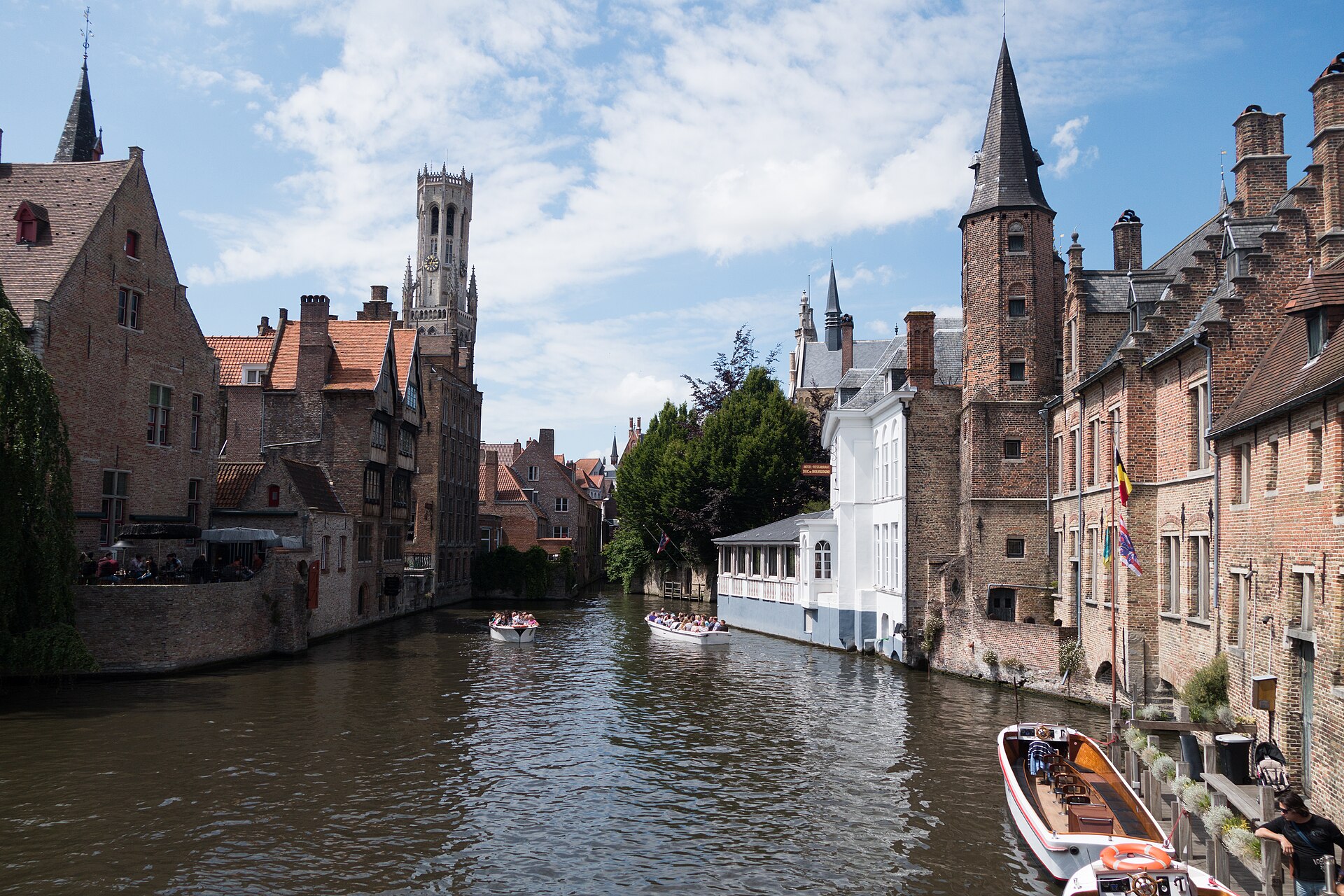
Go through Belgium's Flemish heartland from Brussels to Antwerp, Ghent and medieval Bruges, then relax on the North Sea dunes at Ostend and Zeebrugge.
Day 1: Brussels to Antwerp
Driving: 1h10 (55 km)See: Grand-Place in Brussels, Atomium, Royal Museum of Fine Arts Antwerp, and Diamond Quarter.
Overnight: Camperpark Vogelzang (Antwerp)
Day 2: Antwerp to Ghent
Driving: 0h55 (60 km)See: Ghent's Gravensteen Castle, Saint Bavo's Cathedral, and evening canal strolls along Graslei.
Overnight: Urban Gardens Gent (Ghent)
Day 3: Ghent to Bruges
Driving: 0h50 (48 km)See: Bruges Belfry, Church of Our Lady, Minnewater Park and lace shops.
Overnight: Camperplaats Bargeweg (Bruges)
Day 4: Bruges to Ostend & Zeebrugge
Driving: 0h40 (35 km)See: Zeebrugge port marina, coastal tram line, Ostend beachfront promenade, and Fort Napoleon.
Overnight: Camperpark Westende (Westende)
Day 5: Ostend to Brussels
Driving: 1h25 (115 km)See: A morning walk along the North Sea dunes, then back to Brussels via Aalst.
Overnight: Camping Caravanning Club Brussels (Grimbergen)
Must-see
- Rozenhoedkaai canal panorama in Bruges
- Gravensteen Castle battlements in Ghent
- Antwerp Central Station architectural interior
- Ostend beach boardwalk and the Atlantic Wall open-air museum
Free stops
- Beguinage Ten Wijngaerde courtyard gardens in Bruges
- Vrijdagmarkt public square exploration in Ghent
- Zeebrugge beach harbour wall and sea wall walk
Before you go
- Park at the Bargeweg camperpark outside Bruges. Don't try the inner cobbled streets.
- Hop on the coastal tram (Kusttram) to reach Ostend, Blankenberge and Zeebrugge without moving your van.
- Check Low Emission Zone rules before driving into Antwerp or Ghent's city rings.
Where to stay overnight
- Wild camping is banned everywhere in Belgium: public roads, forests, beaches and nature reserves.
- Municipal and private 'camperplaatsen' (Flanders) and 'aires de camping-car' (Wallonia) give you cheap overnight stops with water, dump stations and electricity.
- Commercial campsites ('campings') are common on the North Sea coast and in the Ardennes, with laundry, showers and recreation facilities.
- Bivouac zones ('bivakzones') in nature reserves are for hikers and cyclists with small tents only. Motorhomes can't stay there.
- You can't stay overnight on ordinary streets or car parks unless signs say motorhomes are allowed.
- Park4night, Campercontact and CampingCard ACSI are the best apps for finding verified campsites and aires in Belgium.
- Book ahead for coastal and Ardennes campsites in July, August, and over Ascension or Pentecost weekends.
Driving rules and road quirks
- Drive on the right and overtake on the left.
- At unsigned junctions, priority to the right applies ('priorité à droite' / 'voorrang van rechts'): vehicles joining from the right have right of way, unless signs say otherwise.
- Motorway speed limit is 120 km/h for motorhomes under 3.5 tonnes, and 90 km/h over 3.5 tonnes.
- Rural road speed limits are 70 km/h in Flanders and 90 km/h in Wallonia, unless signed otherwise.
- Speed limit in towns is 50 km/h. Brussels and many city centres default to 30 km/h instead.
- Motorways are toll-free for campervans under 3.5t. Over 3.5t, you need a Viapass satellite toll box.
- Brussels, Antwerp and Ghent have permanent Low Emission Zones. Register your foreign-registered vehicle online before entering, or risk a big fine.
- The drink-drive limit is 0.5 g/l (0.05%). Police run random breath tests at motorway exits and city checkpoints.
- A standard Category B licence covers campervans up to 3,500 kg. You'll need an International Driving Permit if your licence isn't in English, Dutch, French or German.
Typical Campervan Travel Costs in Belgium
Belgium's good value for travel: motorways are toll-free for standard campervans. Just budget for city parking and summer campsite fees.
| Campsite pitch (2 adults, electric, high season) | €25 to €45 per night |
|---|---|
| Motorhome aire / camperplaats | €10 to €20 per night |
| Diesel fuel (per litre) | Roughly €1.65 to €1.85 |
| Trappist abbey beer at a local café | €4.50 to €6.50 |
| Museum or historic citadel admission | €10 to €18 per adult |
| LEZ mandatory vehicle registration | Free (admin fees only if late) |
International Borders and Ferry Links
Belgium sits at the crossroads of Western Europe, with easy international touring and direct ferry links to the UK.
- Schengen Area: no routine checks at the borders with France, Germany, Luxembourg and the Netherlands, but carry a valid passport anyway.
- Cross-Channel Freight & Ferries: Zeebrugge handles major maritime routes, with ferries direct to Hull in the UK, plus easy road links to Calais in France.
- Cross-Border Driving Rules: you'll need a Crit'Air sticker for France and an Umwelplakette vignette for Germany.
- Customs Allowances: personal-use allowances for Belgian chocolate and abbey beer are generous when travelling between EU neighbours, as long as it's for personal consumption.
Day 1: first-timer checklist
- Check the exterior and roof with the depot staff, and photograph any existing scuffs or scratches.
- Test the Truma heating, hot water boiler, cooker ignition, fresh water gauge and fridge (12V/gas/mains).
- Find the hook-up lead, fresh water hose, levelling ramps, spare wheel or puncture kit, and hi-vis vests.
- Ask staff for the vehicle's exact height, width and unladen weight. Note it on the dashboard for bridges and parking barriers.
- Check if the van's already registered for the Brussels, Antwerp or Ghent Low Emission Zones.
- Find a supermarket outside the centre, Delhaize, Colruyt or Carrefour, for bottled water, food and toilet chemicals.
- Keep your first drive under 75 km. Get a feel for the braking distance and mirrors before hitting busy traffic.
Must-do and must-try in Belgium
Must-Do Touring Highlights
- Take a boat along Bruges' canals, then walk the cobbled alleys after dusk once the day-trippers have left.
- Climb the rock-cut steps to the Citadel of Dinant, above the River Meuse.
- Watch the Last Post ceremony at the Menin Gate in Ypres, held every evening at 20:00.
- Walk the wooden boardwalks over the peat bogs of the High Fens (Hautes Fagnes) Nature Reserve.
Iconic Belgian Gastronomy
- Moules-Frites: fresh Zeebrugge mussels steamed in white wine and herbs, served with double-fried Belgian frites and mayonnaise.
- Belgian Waffles: try the dense, caramelised Liège waffle and the light, crisp, rectangular Brussels waffle.
- Carbonnade Flamande: beef and onion stew braised in dark abbey ale, with thyme and bay leaves.
- Trappist Beers: brewed in monastic towns including Westmalle, Chimay, Orval and Rochefort.
Unique Belgian Detours
- Kusttram: the world's longest tram line, running 67 km along the North Sea coast from De Panne to Knokke.
- Durbuy: wander the narrow limestone lanes of this town, billed as the smallest on Earth, ringed by Ardennes forest.
- Waterloo Battlefield: climb the Lion's Mound (Butte du Lion) for views over the 1815 battlefield where Napoleon was defeated.
- Canal du Centre Boat Lifts: see the UNESCO-listed 19th-century hydraulic ship lifts near La Louvière.
Local apps and emergency numbers
- Emergency Services: dial 112 for police, ambulance or fire brigade. Operators speak French, Dutch and English.
- Warning Triangle and Hi-Vis: you must carry a warning triangle, a hi-vis jacket for the driver, and a first-aid kit.
- Language Zones: Flanders (north) speaks Dutch, Wallonia (south) speaks French, and the far eastern cantons speak German.
- Camper Apps: download Park4night and Campercontact to check camperplaats facilities, opening dates and user reviews.
- Navigation: use Waze or Google Maps with offline maps downloaded. Watch for 30 km/h limits and Low Emission Zone boundaries.
- Payment: Bancontact, Visa and Mastercard work almost everywhere, but keep €10 to €20 in coins for coin-operated water and electric points at aires.
Official live links
- Visit Flanders — Official tourism site for northern Belgium: Bruges, Ghent, Antwerp and Westhoek.
- Visit Wallonia — Official tourism site for southern Belgium: the Ardennes, Dinant and Namur.
- Brussels Low Emission Zone — Official government site for checking vehicle criteria and registering foreign plates.
- Antwerp Low Emission Zone — Official portal for Antwerp's emissions zone rules and registration.
- Belgian Road Safety Institute (VIAS) — Official guide to road safety, speed limits and traffic laws in Belgium.
Belgium campervan FAQs
Can I wild camp in a campervan in Belgium?
No. Wild camping in a motorised vehicle is banned across Belgium. Stick to registered campsites, municipal camperparks or private aires. Forest bivouac sites are for unmotorised hikers only.
Are Belgian motorways subject to tolls?
Belgian motorways are toll-free for campervans under 3.5 tonnes. Only commercial vehicles and heavy motorhomes over 3.5 tonnes need a Viapass satellite toll box.
How do Low Emission Zones (LEZ) affect foreign campervans?
Brussels, Antwerp and Ghent run strict Low Emission Zones. Register your foreign-registered vehicle online in advance through the official municipal portals, even if it meets Euro emissions standards, or you'll face automated camera fines.
What is 'priority to the right' and does it still apply?
Yes. Unless there's a priority sign (yellow diamond) or a stop/yield sign, vehicles joining from your right have right of way. You'll meet this rule often in residential suburbs and rural villages.
What driving licence do I need to hire a campervan in Belgium?
A standard Category B licence, held for one to three years depending on the supplier, covers vehicles up to 3,500 kg. If your licence isn't in Latin script, carry an International Driving Permit.
Can I take my hire campervan from Belgium into neighbouring countries?
Yes. Most rental suppliers allow travel into Schengen neighbours like France, the Netherlands, Germany and Luxembourg. Declare your international route when you book or pick up.
Are winter tyres mandatory for campervans in Belgium?
Winter tyres aren't a legal requirement in Belgium, but fit M+S or 3PMSF tyres if you're touring the hilly Ardennes between December and February, where snow and black ice happen.
Can I park a campervan in Belgian city centres?
You can park in standard bays if your van fits within the lines without overhang, but historic centres have narrow streets, cobbles and tight multi-storey barriers. It's safer to park at peripheral camperplaatsen or P+R hubs and use public transport.
How does the Price Beat Guarantee work?
Find a lower price and we'll beat it. The quote must be for the same vehicle from the same supplier, with identical depots, dates and times, matching inclusions, mileage and excess options, and be live and verifiable before you book. Conditions apply — see our terms.